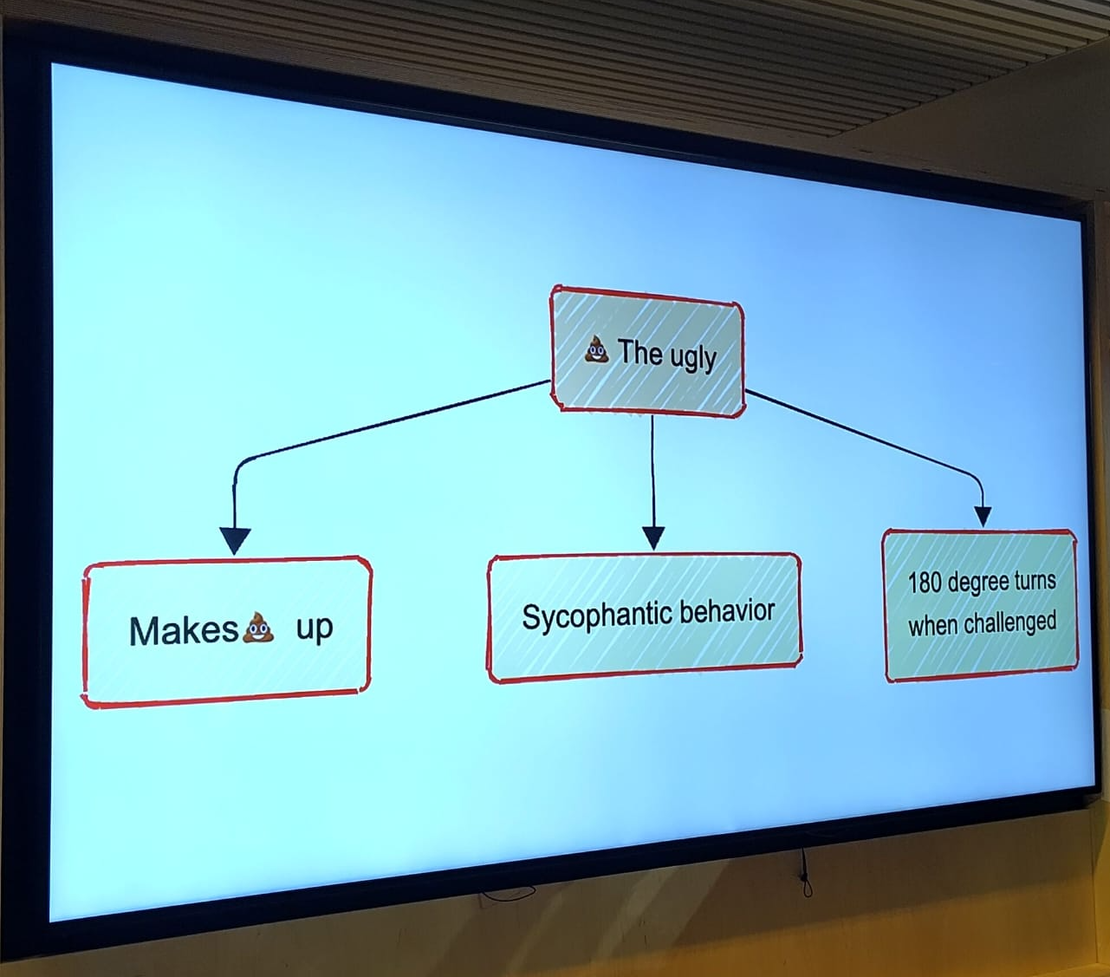
AI Won't Kill SaaS
- Christophe Dujarric
- March 10, 2026
9 min read
In the Series “AI will take our jobs”, current episode is “AI will kill SaaS”. Because of vibe-coding. Because of OpenClaw. Because of any new untested-in-real-life-applications tech.
Let me answer in short: no.
Well, if the SaaS in question is yet another GPT wrapper, a pale copy of its competitors, or any form of low-value-add product, the answer might be yes. For the better. Unless you are an Enshittificator (kudos to the Norwegian Consumer Council for this campaign).
I’m actually going to take this opportunity to reflect a little on what I believe makes great SaaS, and how AI can support that, rather than destroy it.
It’s been more than 12 years that I had the chance to work on building SaaS products that found their unique strength (call it USP if you want, even if the acronym isn’t that) in one thing: expertise. Not that the past products I worked on didn’t have that, but Blackfire.io and Bump.sh really found that as their competitive edge.
Expertise is your edge, ICP is your wedge
You build a SaaS product from a product vision and a market vision, ideally with maximum overlap for a given ICP.
In other words, you build a solution for a specific problem and, as long as you want to monetize it, through dollar-based discovery.
As much as most of the tech founders I worked with had a clear vision for an innovation, what really brought tremendous value to their product was the feedback of their users and customers.
You can build an MVP out of thin air, because of a problem you experienced yourself, and believe that many others do, like you. That’s for instance the story behind Bump.sh. It started with its founder breaking something in production because his API changes couldn’t be properly communicated to the rest of the team. So he built a tool that would, for any API technology (REST, event-driven, and roadmapping SOAP, gRPC and GraphQL) publish an always-up-to-date API documentation, together with its automatically generated changelog.
Your product really grows when you confront it to your ICP. When we started looking for the right ICP to generate growth, we quickly realized that only part of that vision had actual growth potential. And that was thanks to the countless conversations we had with customers and leads (ready to pay for the tool). That parenthesis is key actually: not that I don’t value the feedback from free users and Open Source Communities - many brilliant minds in there - but building features people won’t pay for means death for your product within months.
We realized that many companies were still adopting (sometimes struggling) OpenAPI for REST APIs, and therefore our promise to “manage API contracts for all technologies” was far too long ahead. From here, we focused our efforts on OpenAPI and REST, in such a way that we built a recognized expertise (we even published the very first OpenAPI cheat sheet, and a finally decent and up to date API contract example, after the aging “Pet Store”).
That expertise showed from the very first touch we had with leads, to long lasting relationships with key tech actors on the market, such as Elastic, MongoDB, Redpanda and Motorola Solutions. Collectively, they helped us build a virtuous loop. Each and every of our customers helped us build our roadmap into a coherent product with a clear positioning.
It’s also something I have experienced from the other end myself. I have tried amazing tools that helped me ask myself the right questions about my practice. Questions that I would otherwise have left aside, leading me to fail in my tasks.
A SaaS tool is built from the needs of a broader community, which may think about needs and problems you haven’t thought of yet, and therefore help you fix it proactively. And solutions come from the SaaS creators’ expertise, who are fully dedicated to fixing the problem (not a part time job like you would do while vibe-coding a side project).
Build or buy, the equation didn’t change much
We didn’t have to wait for AI to burst like it did for the past couple of years to face such a question: build or buy? It’s always been there.
Now keep this in mind. Even though Open Source projects are currently facing massive challenges with AI agents that make it possible for people to discard visiting their repositories, and therefore complicate monetization, one thing was true, and I believe will always be: it was possible to monetize Open Source projects with paid versions because the code is only the implementation. It is the “how”, and little bit of the “what”, but not the “why”.
You had the option to pick between “buy” and “take some Open Source project or build myself”. You now have the option to pick between “buy” and “build from scratch with AI”. Things didn’t change much here. Except possibly that you miss out on collective intelligence that your LLM might not find (it still is a black box, no guarantee it fetched the right info unless you tell it to).
Building is now much cheaper, thanks to AI, and “vibe-coding”. But building means:
- you still are doing something else than your core job
- it’s never just building, it’s also about maintenance and evolution (think “Total Cost of Ownership”)
- you don’t benefit from collective intelligence: it’s only you behind your laptop, through the filter of your LLM and the tunnel vision it induces.
I don’t mean that you should never build yourself. I’m just saying you should be extra careful, since now it’s easier and more tempting. You might very well make a mistake quicker by starting on your own.
Doing things that wouldn’t have been done anyway
OK, let me give AI some space. In some cases, I do believe that it is just the right solution. And I have my own example. Lately, I rebuilt my website.
It used to be a Wordpress blog. Back in December, after all the work done on that end at Bump.sh, I realized that Wordpress was just too limited for my use case, unless I would pay expensive amounts in subscriptions, and someone to make a theme that would meet my needs.
Now it runs on Hugo, and finds its design roots in Hugoplate as a template. Yet clearly, Claude helped. From an initial version that looked A LOT like the Hugoplate demo, I used Claude Code to make countless adjustments.
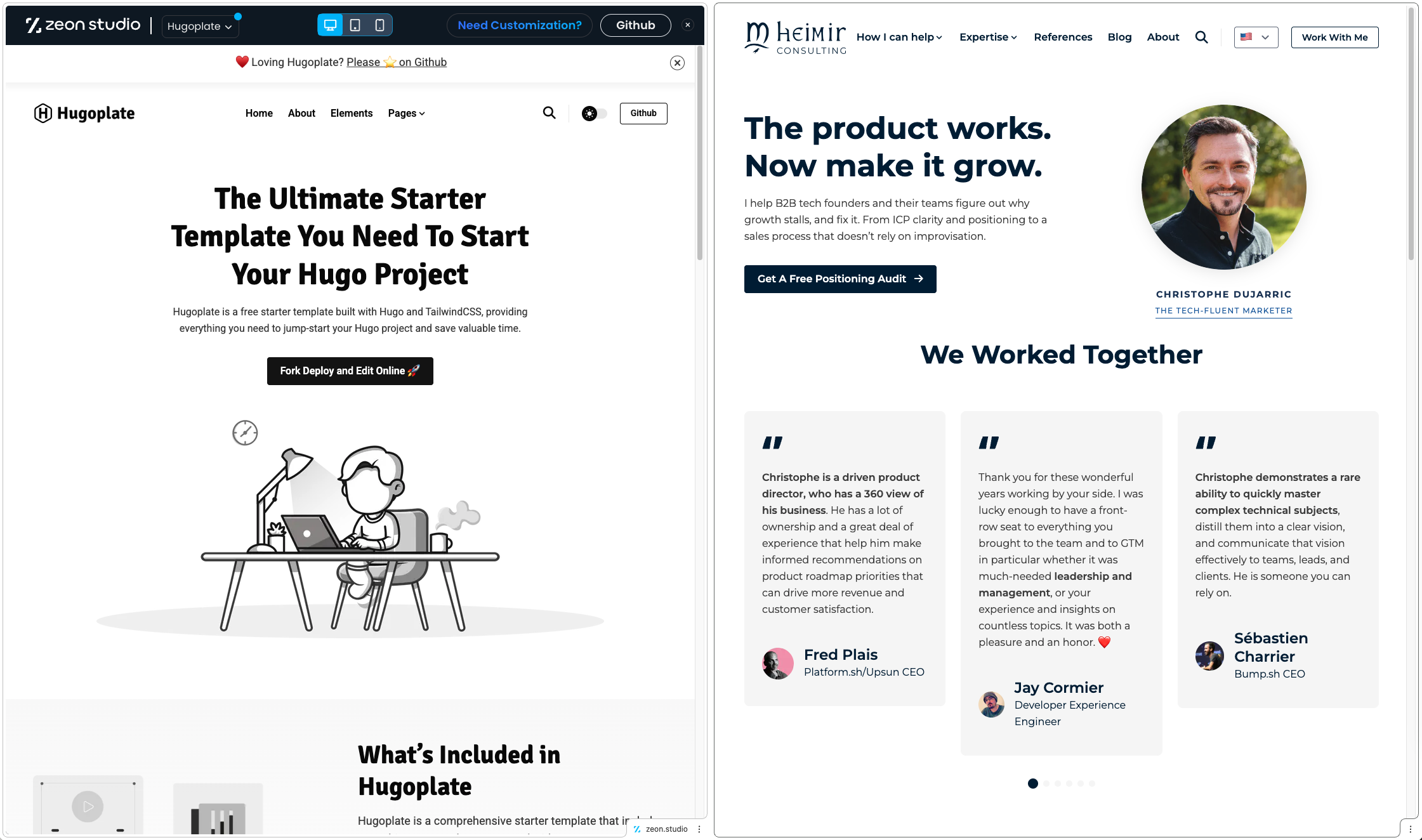
Now of course, as you see on the screenshot, there is this “Need Customization?” CTA on the Hugoplate demo. Am I guilty of using an LLM instead of clicking it and paying to get my customization? Unfortunately, I just couldn’t afford the budget, while just creating my company as an independent contractor.
For me the “not build and not buy” trade-off quickly turned into “build or not buy”, with an obvious decision.
And in that case, I was simply not the right ICP for Zeon Studio.
That is also something that AI didn’t change.
Of course, we could always wonder: what about larger companies, who have budget for this? What about all of their employees who’ll start building quick things where a third party would have done it for them, or that would have lead them to hire more people?
Replacing, empowering, or just changing the problem?
Believe me, I’m very sensitive to those two questions. And I won’t have a strong opinion about this. Maybe just one more question: could letting current employees do their “quick tooling and fixes” on their own help stabilize the employment market? Could it help us avoid the craziness that happened post Covid, where massive investments were made, which created hundreds of thousands of jobs overnight, just so that a few months later companies realized they had done it all wrong, and laid-off massively?
Some inspiration about this, from a Harvard Business Review article: “AI doesn’t reduce work, it intensifies it”.
It is also my experience (happy to hear if you had a different one): I’ve started doing new things. I’ve been faster at others. I would never have hired someone to do it for me; it just helped me be more efficient. And yet, on a regular basis, I wondered:
- “Oops, did I double check that last sentence I sent over email after asking my bot to refine my phrasing?”
- “Should I have spent all of that time playing with my bot, or would have I been much quicker in making a decision on my own?”
- “Why am I so exhausted today?” (before realizing I spent the whole day delivering countless things, with almost no break)
AI is about asking the right question
Having somewhat done my due diligence, I can also claim one thing: there is no magic with AI. First off, as I mentioned before, it is an elaborate calculator. Yet it is more Artificial than Intelligence.
I’ve now used ChatGPT, Gemini, Mistral and Claude. I’ve created a small website (but with tight requirements), I’ve created marketing content and highly personalized sales outreach content, I’ve automated tasks.
Throughout the tools I’ve used that offer to directly “let AI work for you”, I’ve always been extremely cautious. The main flaw I see in there is that, especially when you want to start automating a given task, you set a prompt, and forget about it. It’s like creating a GPT, Gem, and equivalents, letting it give you the result and not do any review.
Well, that’s possible over-estimating yourself. Did you ask the right question? Have you never had that situation, in a conversation with another person, when you said “sorry, I wasn’t clear”?
Not even talking about hallucinations, your question should be super sharp if you want to trust the answer of an LLM. Yes, there are great methods to minimize risk when writing a prompt, such as CODE (Context, Objective, Details, Examples). But:
- iterating over the result can fix what went wrong, and that happens quite often
- iterating over the result can get you much further than you imagined
- in any case, your expertise, drawn from all the work you’ve done, all the conversations you’ve had, will let you ask questions that others wouldn’t have been able to formulate.
AI can complement you, but you should give it the right start.
Let’s wait, so we can take a step back
AI/LLMs and all the related hashtags: everything is moving extremely fast right now, changing overnight. Everybody is trying to make sense of it. Many are either in a Fear Of Missing Out, or trying to find that one opportunity that will make them a millionaire.
Fun anecdote: things move so fast that both Claude and ChatGPT had no idea what OpenClaw was in conversations I had with them in the past two days. I had to force them to check. While I saw this morning an article claiming its adoption was exploding.
“Once the excitement of experimenting fades, workers can find that their workload has quietly grown and feel stretched from juggling everything that’s suddenly on their plate.” (HBR). And all the downsides that come with it.
AI won’t kill SaaS. It gives SaaS creators superpowers. It gives you superpowers. Please, just make sure it doesn’t make you an Enshittificator.
Featured image by Tahlia Doyle.